
“Operate. Track. Improve. With Petra Business Suites, every part of your business moves forward — because what gets measured, gets mastered.”
Loading
“Operate. Track. Improve. With Petra Business Suites, every part of your business moves forward — because what gets measured, gets mastered.”

Multi-currency billing becomes difficult when presentation needs and internal records do not align.
Many organisations need the flexibility to issue invoices in a currency that makes sense for the client, while still keeping internal accounting grounded in the organisation’s base currency. Without the right workflow, this often leads to spreadsheet adjustments, inconsistent exchange-rate handling, and avoidable confusion between what was issued, what was recorded internally, and what was later presented to the client.
Petra is helping solve that problem by introducing a more structured, currency-aware invoicing and receipts workflow. This makes it easier for organisations to issue invoices in one currency, record the value in their base currency, and present invoices or receipts in another supported currency when needed, all without losing control of the original financial record.
One of the biggest practical improvements here is that Petra does not treat invoice currency as a purely visual setting. When an invoice is created, the organisation can issue it in a selected currency while Petra still keeps the underlying value grounded in the organisation’s base currency.
This is important because it supports both sides of the workflow. Clients can receive invoices in a currency that is clearer or more appropriate for them, while the organisation maintains internal consistency for reporting, reconciliation, and financial control.
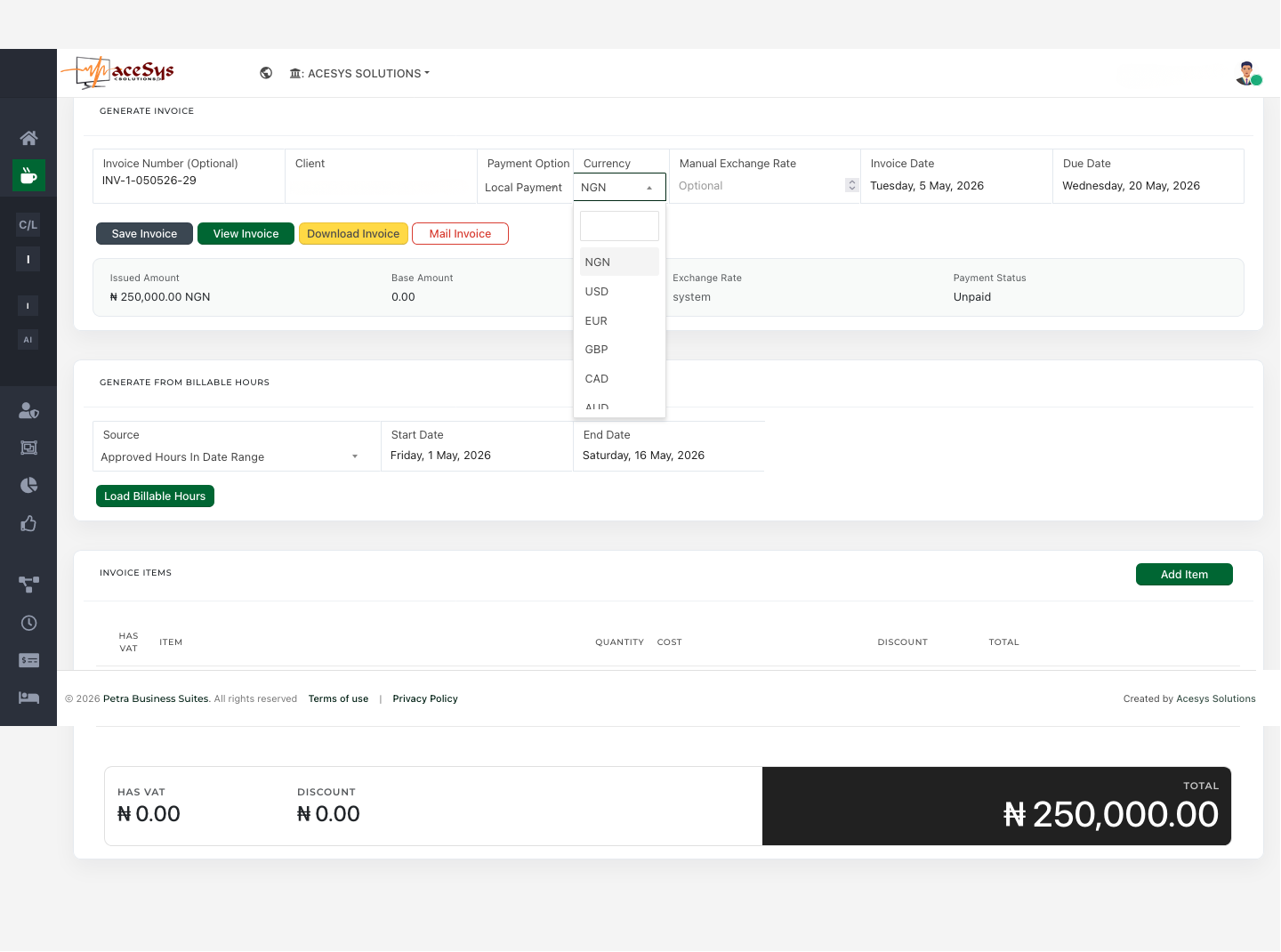
Petra makes it possible to generate invoices in a selected currency while still maintaining internal base-currency records.
A useful multi-currency workflow depends on more than just switching symbols. Petra supports a more deliberate way of handling exchange rates by allowing organisations to work with standard system rates or specify their own exchange value where necessary.
That means invoice generation can remain flexible without becoming vague. Teams can issue invoices with a clear record of the exchange rate used, helping reduce uncertainty around how a value was derived at the time the invoice was created.
This is especially valuable for organisations that need to use agreed commercial rates with clients or want tighter control over how exchange-rate values are applied at document level.
Another strong improvement is the ability to present an invoice in a different currency for download purposes while still preserving the original underlying record. This matters because internal accounting and client-facing presentation do not always need to be identical.
For example, an organisation may have an invoice recorded in its base currency but still need to share a version that is easier for an international client to understand. Petra supports that kind of flexibility without losing the original issued values behind the scenes.
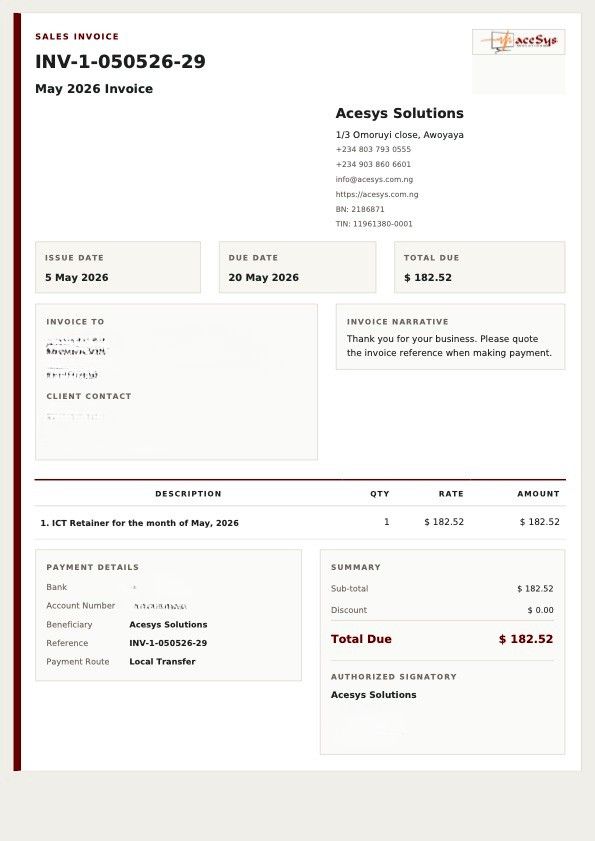
Invoices can be presented in another currency when needed, while the original issued and recorded values remain properly grounded internally.
This improvement is not limited to invoices alone. Petra also extends the same thinking to receipts, which is important for organisations that want consistency throughout the billing lifecycle.
Receipts can now be recorded with their own currency context, exchange-rate handling, payment details, and related notes. This creates a more complete record of what was received and how that value should be interpreted in both operational and accounting terms.
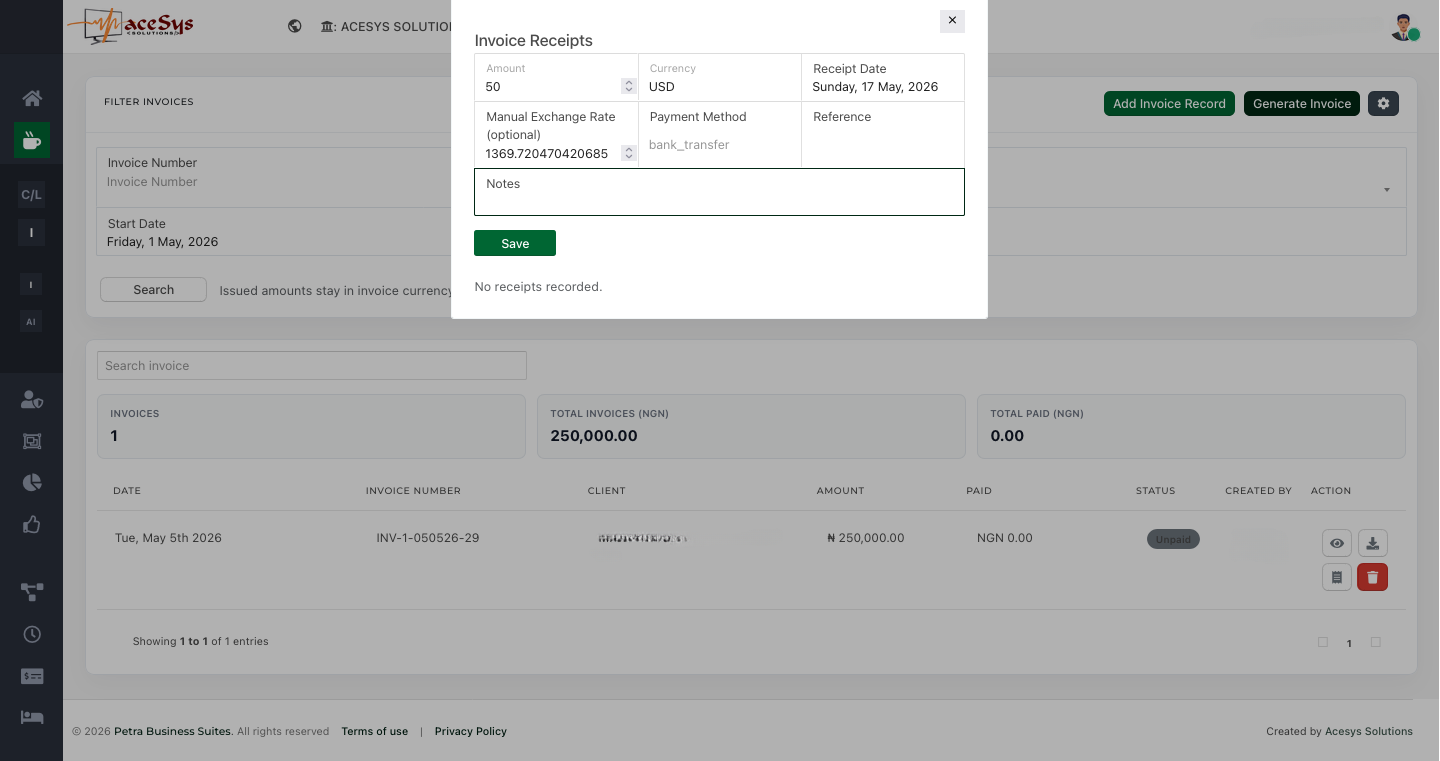
Receipt entry in Petra supports currency, exchange-rate, and payment information, helping organisations maintain a more complete financial record.
Just as with invoices, receipts may need to be presented in a different currency for communication or reporting purposes. Petra supports this by allowing users to choose a presentation currency when downloading a receipt, while still preserving the original stored values in the background.
This makes the workflow more practical for organisations working across currencies, especially where payment confirmation documents need to be understood clearly by clients, partners, or finance stakeholders in another market.
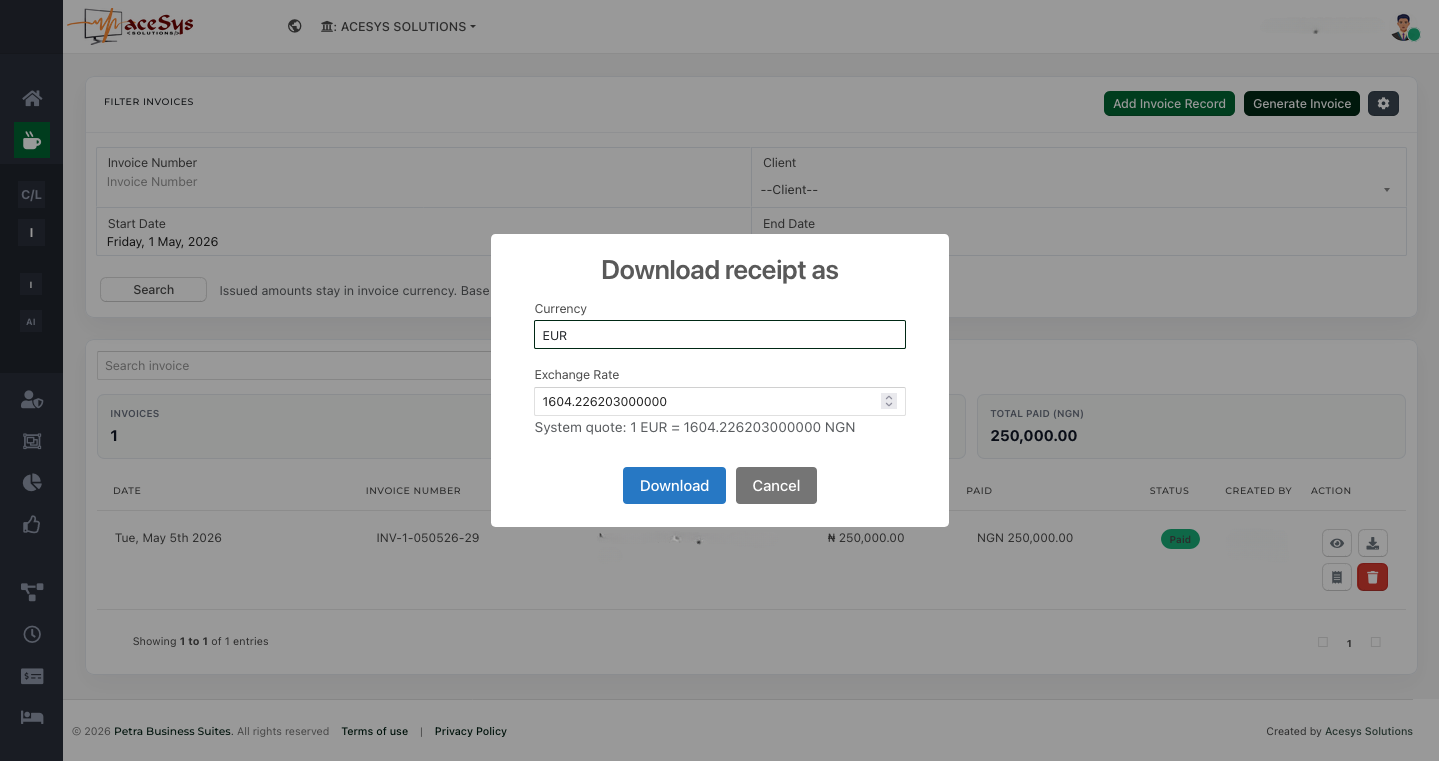
Petra supports currency-aware receipt presentation by allowing receipts to be downloaded in another currency when needed.
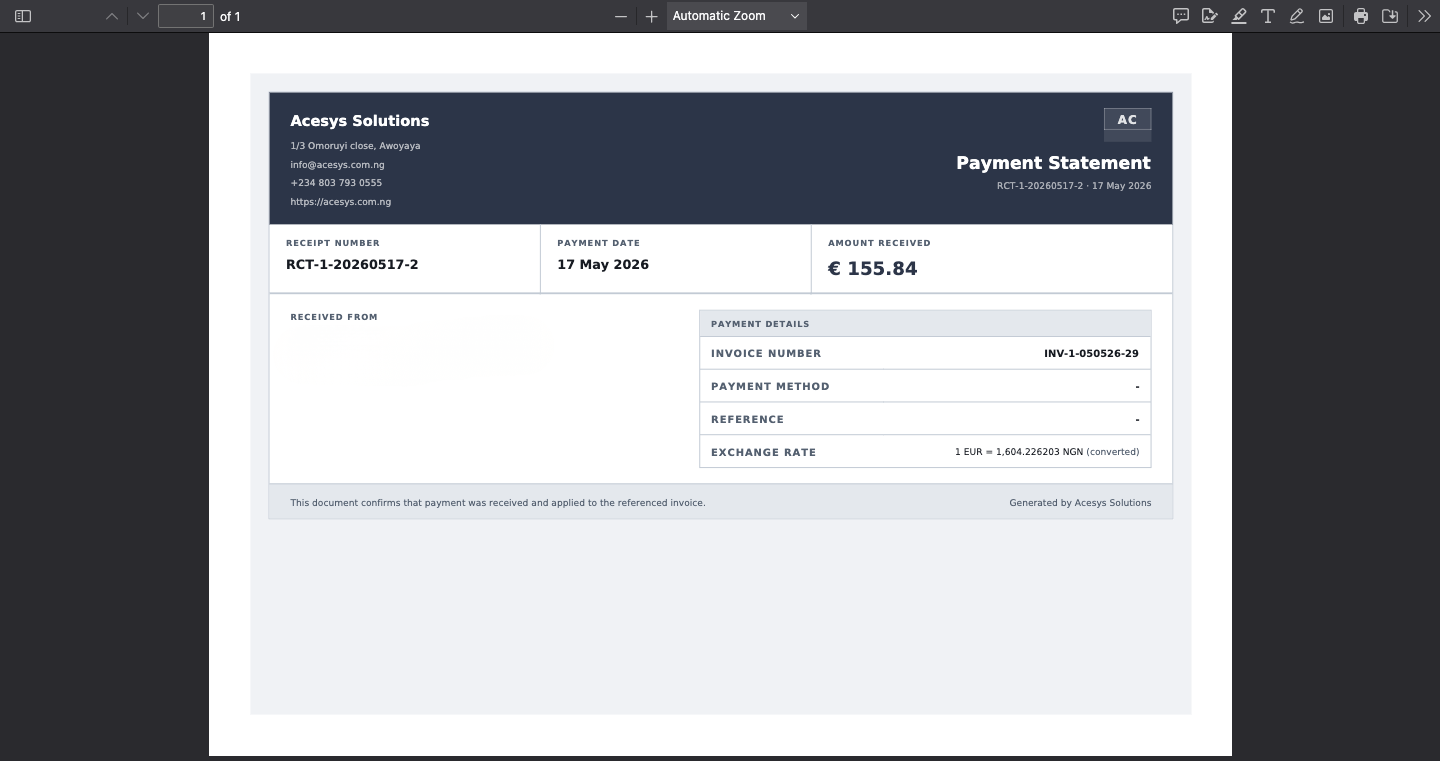
Receipts can be presented in another currency for clarity, while still keeping internal records grounded in the organisation’s base currency.
Currency-aware invoicing is not only a finance feature. It affects client communication, cross-border billing, record consistency, and confidence in the numbers being presented. When organisations have to manually reconstruct exchange-rate logic outside the system, the workflow becomes slower and more error-prone.
Petra helps reduce that friction by creating a more controlled structure for issuing, recording, and presenting invoices and receipts across currencies.
One of the strongest things about this improvement is that it balances flexibility with discipline. Petra gives organisations more freedom in how they present invoices and receipts, but without turning the underlying accounting logic into guesswork.
That balance matters. It means teams can be more responsive to client needs while still maintaining stronger internal standards for financial recording and reporting.
As organisations grow, the ability to work confidently across currencies becomes more important. Clients may need one currency, internal finance may require another, and the document itself may need to be presented differently depending on context.
That is where Petra is creating real value. By supporting currency-aware invoicing and receipts, Petra helps organisations issue documents more flexibly, preserve base-currency integrity, and present financial information more clearly whenever a different currency view is needed.

Book a walkthrough and we will show how Petra connects the ideas in this article to real work tracking.
Petra Support
Share your details so our team can keep the conversation connected if you come back later.